We arrived back into Bali for the second time this year three nights ago. For this trip we have chosen the Padma, approximately 40 minutes drive north of Ubud.

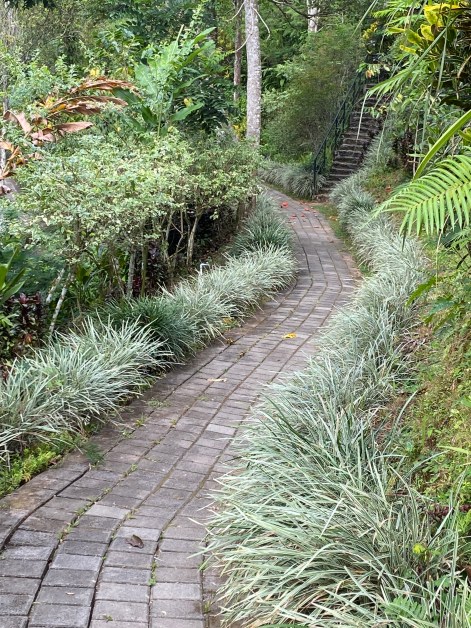
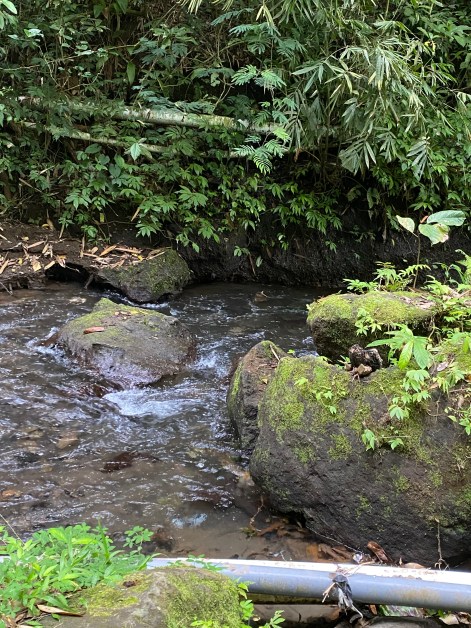
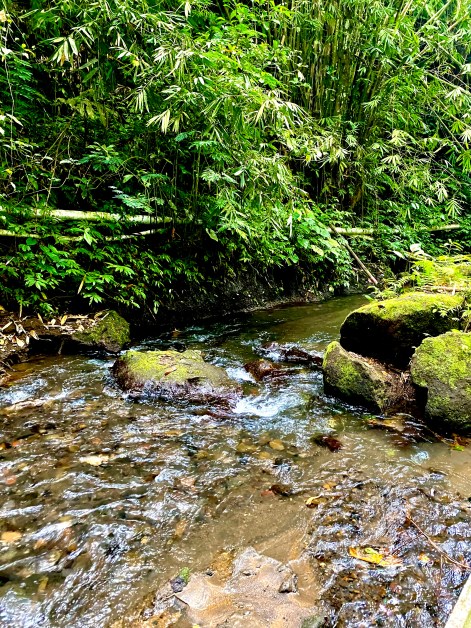
The Padma, chosen after being highly recommended by a friend has lived up to expectations. From the misty outlook over dense tropical forest, to the steep, 1 kilometre walk down the winding paths to the tranquil, babbling creek that runs below, it’d be hard not to find this place, relaxing, impressive, memorable……





But as with our last trip to Bali earlier this year, it’s the people that impress me the most. The Balinese people are extremely family orientated, and proud to be so. The Balinese tradition is that at least one of the sons should marry and bring his bride into the family home. As the son’s parent’s grow old, it becomes the son and his family’s responsibility to care for them. No-one seems to resent this, in fact everyone I speak to seems to accept this as both an honour and a privilege.
What happens though to couples who aren’t fortunate enough to have sons – girls seem to accept, albeit sometimes with sadness, that they will move into their husband’s family home, even if it means leaving their parents without any offspring to care for them as they age. When this is the case I believe the responsibility of caring for any son-less couple as they age falls to the father’s brother’s family, (the daughter’s uncle).
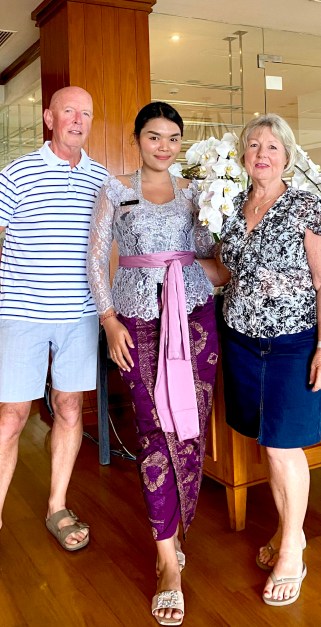
Elta, who seems to be our main hostess tells me she married this year in February. Elta is the oldest of three girls and has no brothers. Apparently, there can be (but not always), a certain amount of social stigma should a newly married couple take up residence in the home of the wife’s parents, as apposed to the son’s parent’s home. Elta’s parents spoke with her during her teenage years suggesting that any prospective partners in the future be sounded out for their acceptance of moving into Elta’s family home. So that is just what Elta did. She told me that one of the happiest moments of her life was when her chosen partner indicated he had no reservations about this change to tradition. They’re now living happily in the back of her parents home in what’s called a Bale, which I think is a seperate abode on the same property. Her parents and her two younger sisters live in the main family home. It seems that both Elta and her parents hope the younger sisters will follow suit and also find partners that will happily live on the parents property. It sounds like there’ll be space found for them all either in the family abode, or by building a seperate bale on the same land.
I asked Elta about crime in Bali. Apparently there is not much of a crime rate here, however, like everywhere, Cyber-crime is on the rise. We ourselves fell victim to Cyber-crime twice just getting to Bali, the first time when we attempted to complete our Electronic Visa to enter Bali on line, and the second time when we attempted to do our Electronic Customs Declaration, also on line before entering the country. It wasn’t till we arrived into Denpasar airport that we became aware we had fallen victim to scammers. Fortunately though, when we return to Australia, I think we’ll be able to lodge a dispute with our bank, and I think we’ll get our money back. We’d like to lodge the dispute earlier, however to do so is likely to result in cancellation of current credit card, and that would leave us in a precarious financial situation for the rest of our holiday. So for now we’re just monitoring our account, and hoping we don’t see any unexpected money leave it.
During this conversation with Elta I was almost brought to tears as she related how she’d attempted to book a villa in Kuta for a few nights for herself and her husband following their wedding in February. Living in an inland village, they had been looking forward to a couple of nights by the seaside. However, they fell victim to scammers when booking their villa, and it seems that as they didn’t book through the safety of a travel agent, they have no recall. They lost their money, and so had no honeymoon away for a few nights at the seaside on their own. I gather they are now saving hard, hoping that one day before children arrive that they can treat themselves to a short holiday somewhere nice. I so hope she gets her wish.
I love getting to know the Balinese people. In Australia we ourselves are considered at best, comfortable financially, but by no means are we considered wealthy by Australian standards. Yet we can afford trips to Bali staying in luxury resorts, and we have travelled to many overseas countries. For most of the Balinese people, a few days holiday in a different location on their own island is the most their modest incomes can stretch to. Yet these people never fail to impress me with their genuine smiles, their happiness, and the pride they take in their jobs. By comparison, hospitality staff in Australia are often ashamed of their jobs, and their attitude when waiting on clients tables, or making up a hotel room bed can sometimes be resentful.
I often consider myself to be truly lucky to be living in Australia, but when holidaying in Bali, I wonder…… Are we really that lucky after all in Australia. Will I still feel lucky if I end up living the final years of my life, as many Australians do, in the lonely ward of some aged care facility. Will I be thinking in the final years of my life that it would have been nice to have been born into a financially poor, but family rich Balinese village. A holiday on this gorgeous Island certainly provides food for thought……
 Life of Riley - on whatever
Yes that is how I felt when in Nepal. Such caring kind people who are very poor but happy to make sure travellers are catered for. You have a daughter who might build a Granny Flat for her parents.
LikeLike
A granny flat – no. The tolerance and respect on both sides in our society prevent that sort of harmonious close living. Even living in the same suburb would be difficult for most families in our society I suspect. I can see the tolerance and respect that allows for those close living relationships is something instilled from birth and something that is widely accepted as the norm here in Bali. It’s not a part of our society, but we’re all poorer for it for sure.
LikeLike
It happens here in NZ with siblings & either 1 or both parents either sharing a large house or 2 houses on the same property. I think it’s a brilliant idea.
LikeLiked by 1 person
I can see that the conditions in Bali have made you think about social issues and the disparity between rich and poor nations, Chris. It is a good topic to mull over and compare different models. I think each one has its advantages and disadvantages, but I’ve always liked the thought of an extended family caring for elders who can then bring wisdom and a different perspective to the family dynamic. It probably wouldn’t work to well for my parents No one could get along with them, (although my son’s former girlfriend has lived her for a time). It’s a problem of Western society I think that we do not value and care for elders.
LikeLike
It wasn’t like that when I was a child, it was common then for one’s parents to mind young children whilst the parents worked, and it was common when a partner died, that the surviving parent would be brought into the children’s home. It’s only taken one generation for that to have disappearred, and I don’t think it’s a good thing. It’s a shame about your own parents Amanda, but, and I don’t mean this as a criticism, merely just an observation – I think it’s a lack of acceptance and tolerance (on both sides, but more so from the younger parties in family relationships – that’s you and I) that have created the big divide. I was so intolerant of my own mother whilst she lived. It was many years after she died that I realised what a bitch I was.
LikeLike
Can you explain a little more about how you were intolerant? I am surprised to hear that.
LikeLike
I focused on mum’s failings, rather than her good points. I focused on what she didn’t give me when I was growing up rather than appreciating what she did give me. I thought I was so perfect, and thought she was so imperfect. Now I realise she gave me everything she had to give…. Most parents do. I didn’t understand my self righteous part in our not so great relationship until it was too late. I thought I knew it all, and thought she knew nothing. Turns out she knew lots, and taught me lots of valuable things. She had a lot of qualities that I wished I’d appreciated earlier. But so many are like me in our western society, we think we have everything so damned right, we think we know it all. We get it wrong so often, especially when we won’t find what there is to respect in our own parents. It’s only when my own children thought they knew it all, and I knew nothing that I realised where they learnt that from – or should I say, who they learnt that from. Younger generations will always know different things to their elders, and will often fail to realise the significance of what is actually handed down. It’s only by realising my own lack of appreciation for my own mother that I’ve started to turn around my own relationship with my children. Children certainly mimic their parents behaviour, and the one thing I didn’t practice when they were young was how to tolerate what was less desirable from my childhood, and how to really see and appreciate the qualities that were desirable. I am who I am not in spite of my upbringing, but because of my upbringing. I used to think my mother did a really bad job of mothering, but then I looked at her life. Wow, did she ever do wonders with what she had to work with. She’d always been given the short straw. Her life was so hard. I had it so easy compared to her.
LikeLike
Chris, some of what you say resonates well with me. Especially this: “I focused on Mum’s failings, rather than her good points. I focused on what she didn’t give me when I was growing up rather than appreciating what she did give me.” This did make me think I should have focused more on Mum’s positives. The negative approach is often doomed to not end well.
Even if my Mother was crap at Mothering, I have come to acknowledge that she did the best she could, given her own circumstances, personality and upbringing. Yes, there are mental issues involved that she never dealt with and refused to acknowledge any hint of their influence, instead abusing me if I tried to gently guide her in some peripheral way, but again, she was not equipped with anything better than to spit back abuse in response. Her lack of inner desire for self-improvement irked me, given her shortcomings and instead she would play the victim card as a coping strategy. My Father didn’t do this so I seem to have a better relationship with him, especially now that Mum has passed. Mum did tell me shortly before she died, just how sad her childhood was when I was trying to distract her from her woes one day, and also how she wanted to give me a better life than she had. In that, she succeeded, even though, similarly to yourself, it was very much imperfect.
Also like you, I see in one of my children, similar words used about me, on rare occasions, that I used towards my Mother, and although I feel they are unjustified in many ways, (when compared to my own Mother), on hearing them, I realise just how hurtful it can be for a Mother to hear those sorts of words from their own child. The child never understands the hurt inflicted, of course, from their perspective, as you also alluded. I was so determined to be a much better parent than my own Mother and strived very hard for that, which means hurtful words from a child is doubly painful for me. But more recently, I have learned to let that go.
Perhaps we might say we learned the hard way that tolerance is something very important that should be encouraged in children, and role modelled by parents.
Ironicially, I was chatting to my hairdresser today about whether I should voice any kind of subtle opinion about a daughter’s choice of relationship (she has hooked up again with someone with whom she has had a previously bad experience), and the hairdresser responded asking me just what would my daughter do with that information? She would only get defensive and refuse to listen, which no doubt was true.
Having said all of this, I do think we most likely did a much better job than our parents and we can be happy with that, but there are is also much to be learnt from our experiences, again, as you alluded to so eloquently. Our life was much easier than theirs in some ways, harder in some ways too, but on balance, much easier.
I appreciate the discussion. Powerful stuff! Thanks.
LikeLiked by 1 person
How lovely to be there again.
LikeLiked by 1 person